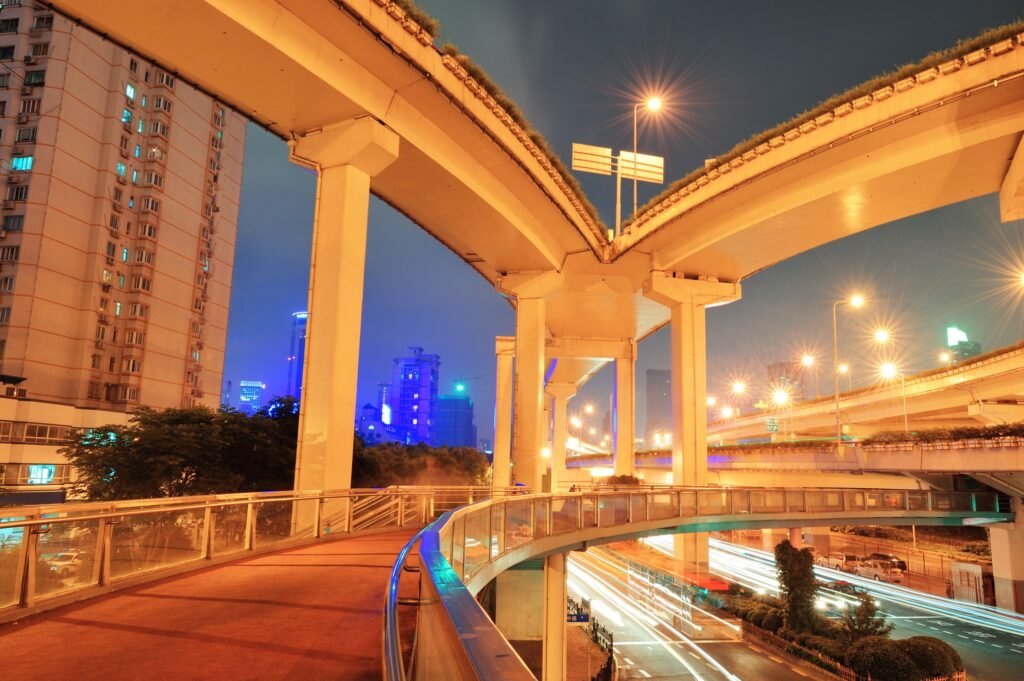

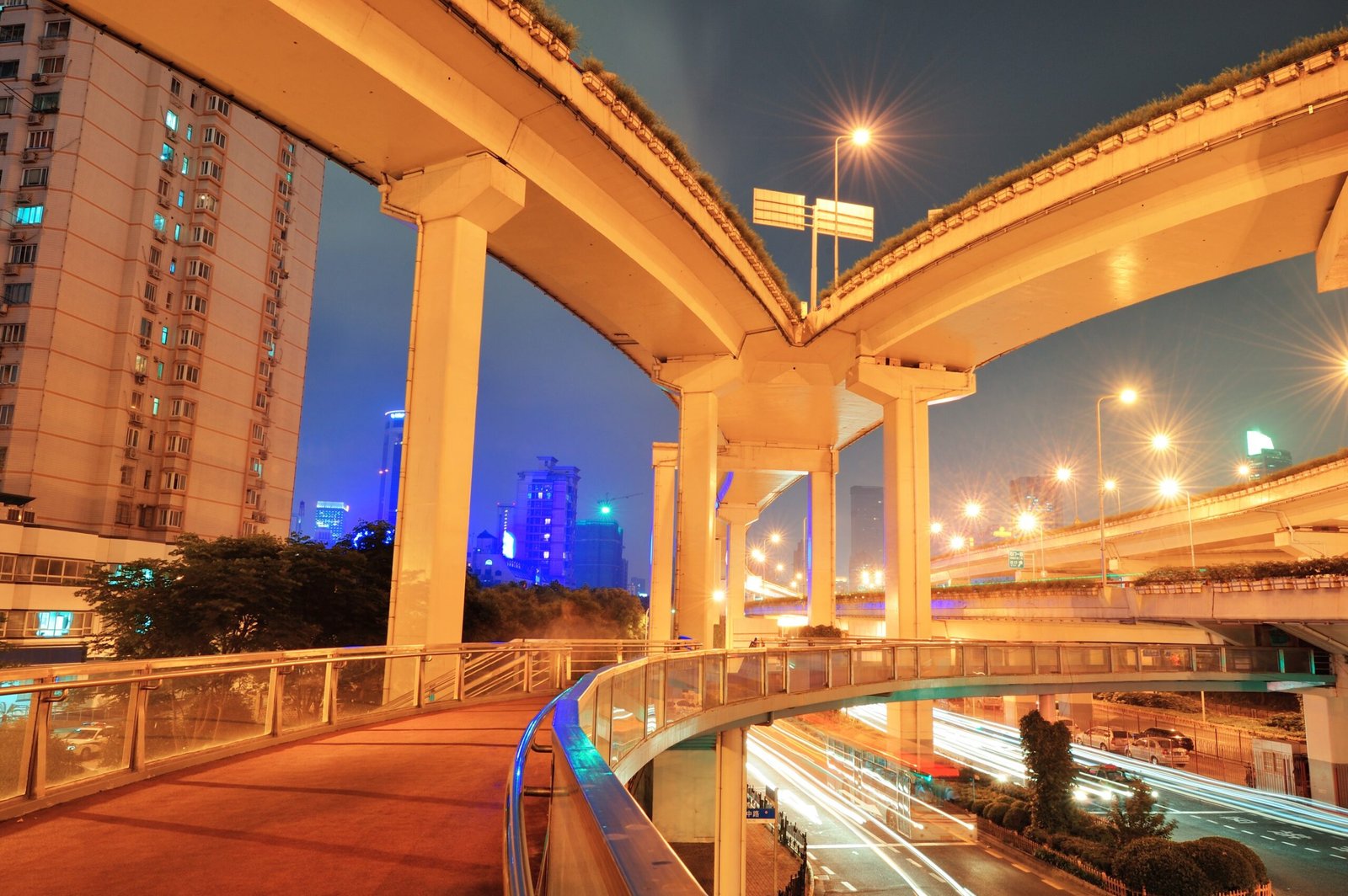
Rapid urbanization has increased traffic congestion across Indian cities. To address this challenge, governments are investing heavily in elevated bridges, flyovers, and pedestrian walkways.
These structures improve mobility, enhance safety, and reduce travel time in dense urban corridors.
Why Elevated Infrastructure Is Important
Elevated structures help:
- Reduce traffic congestion
- Improve road connectivity
- Enhance pedestrian safety
- Minimize travel delays
- Optimize land use in urban areas
Well-designed flyovers and elevated bridges are essential for modern transport networks.
Types of Elevated Structures
1. Flyovers
Constructed to allow traffic to pass over busy intersections or railway crossings.
2. Elevated Road Corridors
Used in high-density zones to increase road capacity without expanding ground-level roads.
3. Rail Over Bridges (ROB)
Built over railway tracks to eliminate level crossings and improve safety.
4. Pedestrian Walkways
Elevated walkways ensure safe pedestrian movement across highways and busy roads.
Engineering Considerations
Elevated bridge and flyover construction requires:
- Strong foundation systems
- Precise structural design
- High-quality concrete and reinforcement
- Compliance with IRC and government standards
- Careful traffic management during construction
Structural durability and load-bearing capacity are critical to long-term performance.
Execution Challenges
- Limited working space in urban zones
- Traffic diversion planning
- Strict safety protocols
- Tight project deadlines
Experienced bridge and flyover construction companies in India ensure systematic execution and quality control.
DBP Infra Projects undertakes bridge, flyover, and elevated structure construction with a focus on structural strength, safety, and timely delivery.
As India continues to expand its urban infrastructure, elevated bridges and flyovers will remain essential for efficient and sustainable transportation systems.